
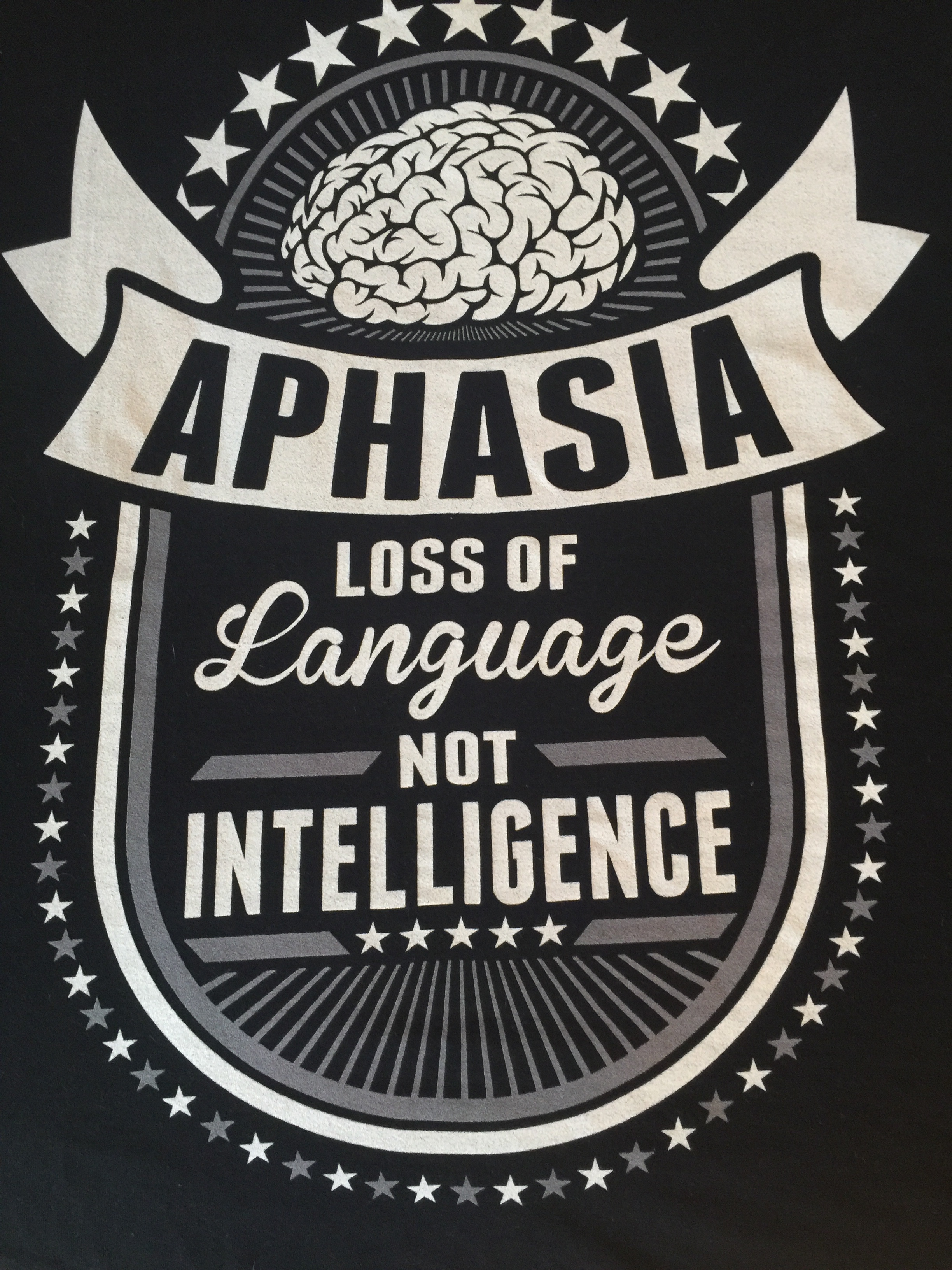
By this motto, I mean that aphasia does not win over me! There are daily communication challenges that aphasia brings, but there are daily “wins” that I acknowledge.
Today I had to make several business calls. I find that most persons who work on the phone a lot, tend to speak too fast for my to process all information that say.
Today, I advocated for my communication needs by identifying myself as a person with aphasia. I shared a friendly definition of aphasia, how aphasia does not impact my intelligence, and that over 2 million people in the United States have aphasia.
I listed 3 ways that the customer service rep. could help me have a successful phone call:
- Speak slowly and clearly
- Say all numbers as single digits (instead of giving an address as 187 West St. say “one, eight, seven” West St.
- Please confirm any numbers I give you any numbers (and I will give them to you one digit as a time)
Yep, 4 phone calls, 3 addresses, one LOOONNNNGGGG confirmation number with letters and digits, and all were successful! I handled my business and count that as a BIG WIN!
 More Than Aphasia, INC